
Polaris Peptides Lab Testing
Every batch is tested by HPLC-MS before it goes on sale, and every vial is vacuum-sealed after freeze-drying. Here is what that means for your research.
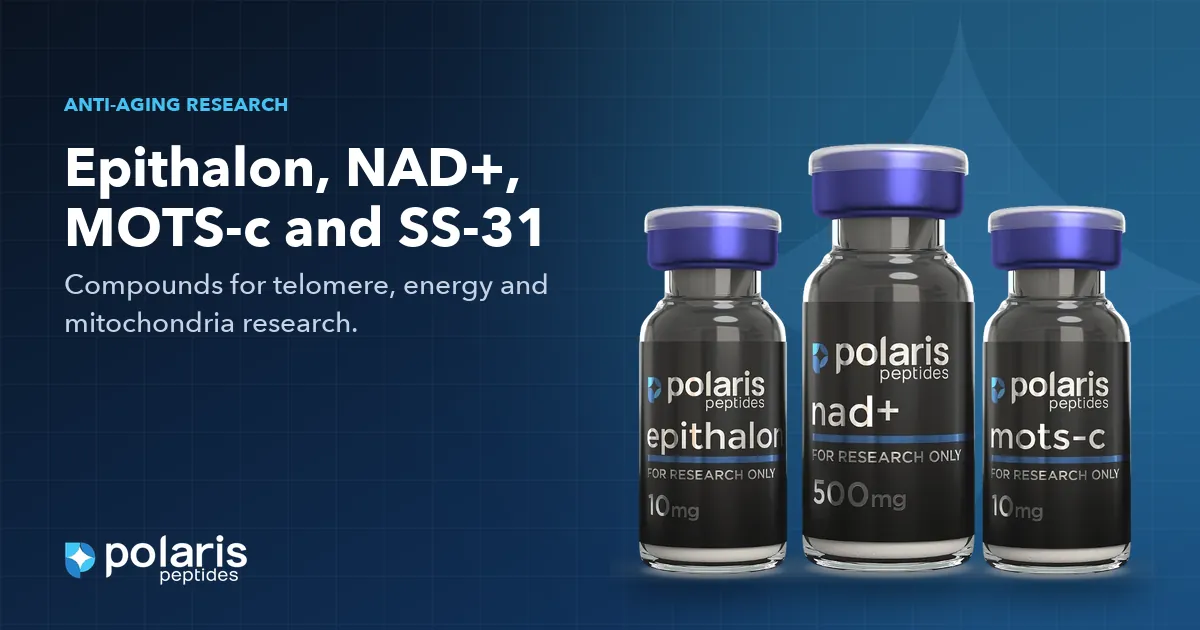
How Polaris Peptides lab testing works
Each batch goes through high-performance liquid chromatography coupled with mass spectrometry, usually shortened to HPLC-MS. It’s the standard method for checking synthetic peptides, and it answers two separate questions in one run.
- Is it pure? HPLC separates the sample into its parts. The main peak is the target peptide, and its share of the total gives the purity figure. Most of our products test above 99%.
- Is it the right molecule? The mass spectrometer measures the molecular weight of that main peak and checks it against the expected value. A sample can be pure and still be the wrong peptide, so this step matters.
Polaris Peptides lab testing happens before a batch goes on sale, never after. For background on the methods, the National Library of Medicine has a large body of papers on HPLC-MS peptide analysis.
Packaging after testing
Peptides are freeze-dried into a dry powder, then each vial is vacuum-sealed. Moisture and oxygen are the two things that degrade dry peptide fastest, and the seal keeps both out. Every label shows the compound, the amount and a batch number.
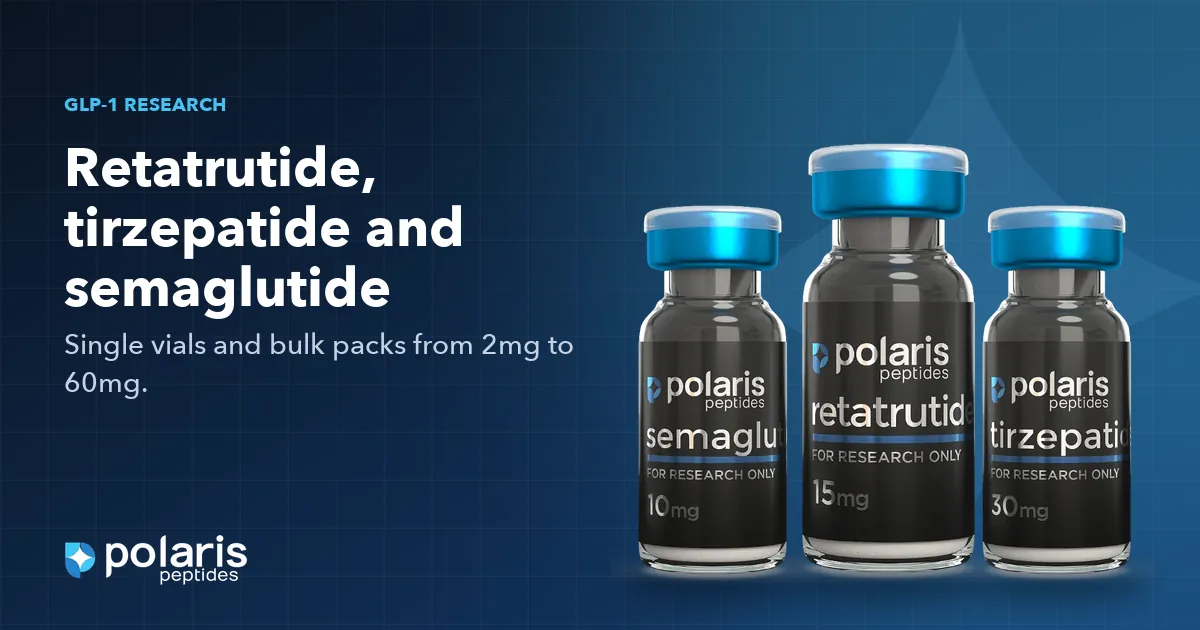
Polaris Peptides lab testing and batch numbers
Each batch gets its own number, printed on the label. Write it down when you open a vial. If a result looks odd months later, the batch number ties it back to the exact material you used.
Why identity testing matters
Many peptides differ by a single amino acid or a small chemical cap. N-acetyl Semax amidate and plain Semax, for example, share the same core sequence. A purity test alone can’t tell them apart, but their molecular weights differ, and the mass spectrometer catches that. That’s the main reason Polaris Peptides lab testing uses HPLC-MS instead of HPLC alone.
Storing tested peptides correctly
Testing only helps if the vial is stored well afterward. Keep sealed vials in a freezer at -20°C, away from light. Let a frozen vial warm to room temperature before you open it, so no moisture condenses inside. After mixing with sterile bacteriostatic water, keep the vial in the fridge at 2 to 8°C and use it within 28 days.
What Polaris Peptides lab testing tells you, and what it doesn’t
HPLC-MS confirms identity and purity. It doesn’t measure sterility or endotoxins, so treat a reconstituted vial with clean technique: swab the stopper, use a fresh sterile syringe for each draw and keep the vial cold. Labs running cell culture often filter solutions before use for the same reason.
It’s also worth knowing what a purity figure means. Over 99% means the target peptide makes up more than 99% of what the chromatograph detects. The rest is usually closely related peptide fragments from synthesis, not foreign material.
Purity figures on product pages
Each product page states the purity for that product, for example BPC-157 5mg, retatrutide 10mg and GHK-Cu 50mg. Where a product is sold as a high-purity grade, such as glutathione 600mg, the page says so instead of rounding up. If a batch differs from the label, as with the current DSIP 5mg batch that tested at 7.5mg, we say that too.
Products covered by Polaris Peptides lab testing
Every product in the store goes through the same HPLC-MS check before sale. These are four of them, each with its purity stated on the product page.
 BPC-157 5mg
 Retatrutide 10mg
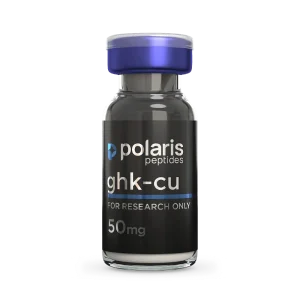 GHK-Cu 50mg
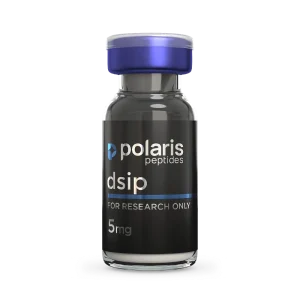 DSIP 5mg
Polaris Peptides lab testing FAQ
What purity do Polaris peptides test at?
Most products test above 99% by HPLC-MS. Each product page shows the figure.
Why HPLC-MS instead of HPLC alone?
HPLC gives purity, but it can’t tell you the molecule is the right one. The mass spectrometer adds that check.
Why are the vials vacuum-sealed?
Air and moisture are what break down dry peptide. Sealing them out keeps the powder stable for months in a freezer.
Where is the batch number?
On the vial label. Write it in your lab notes so results can be matched to the batch.
Shop lab-tested research peptides
Every product is tested by HPLC-MS and in stock now.
Polaris Peptides products are sold for laboratory research use only. They aren’t for human or veterinary use and haven’t been evaluated by the FDA.