
Polaris Peptides GHK-Cu: vials, powder and blends
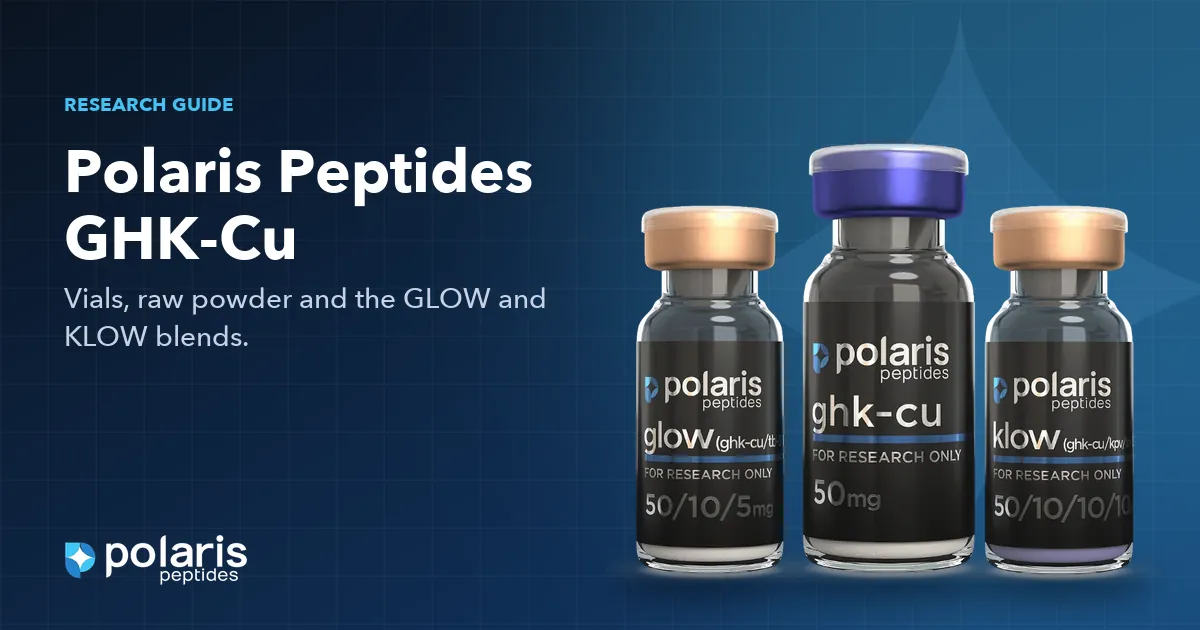
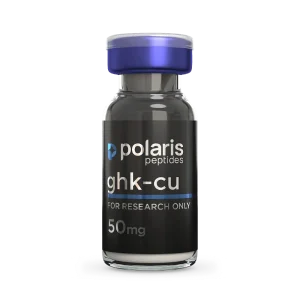
Polaris Peptides GHK-Cu comes as a 50mg vial, a 1 gram raw powder and inside the GLOW and KLOW blends. This guide covers the copper peptide, the research and which format to choose.
What is Polaris Peptides GHK-Cu?
GHK-Cu is the tripeptide glycine-histidine-lysine bound to a copper ion. Loren Pickart found GHK in human plasma in 1973, and it binds copper so tightly that most of it ends up as GHK-Cu. It’s one of the best-known peptides in skin and wound research and a common ingredient in copper peptide serums.
Polaris Peptides GHK-Cu is tested by HPLC-MS and sold for laboratory and formulation research only.
Polaris Peptides GHK-Cu products
- GHK-Cu 50mg: from $35 (on sale)
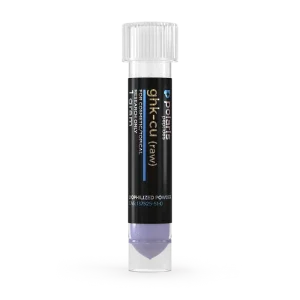
- GHK-Cu Raw Powder (1 Gram): from $30
- GHK Basic 50mg (Copper-Free): from $40 (on sale)
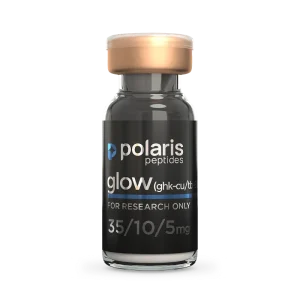
- GLOW Blend 50mg (GHK-Cu, TB-500, BPC-157): from $89
- GLOW Blend 70mg (GHK-Cu, TB-500, BPC-157): from $99
- KLOW Blend 80mg (GHK-Cu, KPV, TB-500, BPC-157): from $125
For lab work, the GHK-Cu 50mg vial is the usual pick. Formulation labs making their own serums buy the raw powder by the gram. Copper-free GHK is handy as a control.
What the GHK-Cu research has looked at
Cell studies, including work by Maquart and colleagues in 1988, found that GHK-Cu raised collagen production by skin fibroblasts. Rat wound models reported more collagen and faster closure, and gene expression work by Pickart’s group linked GHK to thousands of genes tied to tissue repair. Start with this PubMed search for GHK-Cu.
GHK-Cu in the GLOW and KLOW blends
GLOW 50mg and GLOW 70mg pair GHK-Cu with BPC-157 and TB-500. KLOW 80mg adds KPV for inflammation. All three are in our peptide blends range.
Mixing and storing Polaris Peptides GHK-Cu
The vial dissolves in sterile bacteriostatic water: 2mL in a 50mg vial gives 25mg/mL. Keep sealed vials and the raw powder at -20°C, and let the container warm to room temperature before opening. Mixed vials go in the fridge for up to 28 days.
Polaris Peptides GHK-Cu specifications
- Compound: GHK-Cu (copper tripeptide-1)
- Structure: Gly-His-Lys bound to copper(II)
- CAS number: 89030-95-5
- Formats: 50mg vial, 1 gram raw powder, GLOW and KLOW blends
- Purity: over 99% by HPLC-MS
- Packs: vials in 2 to 20, raw powder in 2, 10 and 20 grams
- Use: laboratory and formulation research only
Vial or raw powder?
The 50mg vial is the right fit for lab work that needs an exact, ready-to-mix amount. The 1 gram raw powder is for formulators who weigh their own batches of serum or cream. Per milligram it costs a fraction of the vial, but you’ll need an analytical balance.
There’s also AHK-Cu raw powder, a close relative with alanine in place of glycine, studied mostly for hair follicles. Both copper peptides are blue because of the bound copper. Polaris Peptides GHK-Cu dissolves readily in water.
Calculating GHK-Cu concentrations
- 50mg vial + 2mL water = 25mg/mL
- 50mg vial + 5mL water = 10mg/mL
- 100mg raw powder in 100mL = 0.1% solution
- 1 gram raw powder in 1L = 0.1% solution
Polaris Peptides GHK-Cu picks at a glance
 GHK-Cu Raw Powder
 GLOW Blend 50mg
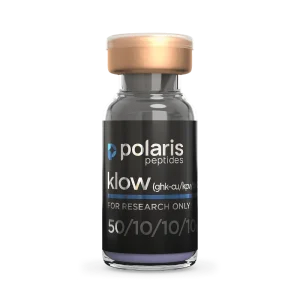 KLOW Blend 80mg
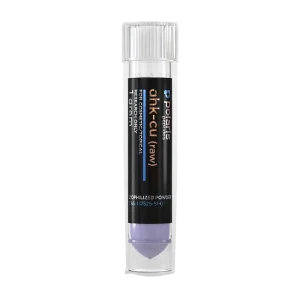 AHK-Cu Raw Powder
Planning a GHK-Cu order
For lab work, total the amount you need and divide by 50mg to get the number of vials, then add a spare. For formulation work, decide on the final concentration and batch size first. A 0.1% serum uses 1mg per mL, so a 100mL test batch needs 100mg and a gram of raw powder covers ten batches.
Polaris Peptides GHK-Cu FAQ
What GHK-Cu products does Polaris Peptides sell?
GHK-Cu 50mg vials, GHK-Cu raw powder by the gram, copper-free GHK 50mg, and the GLOW and KLOW blends.
Why is GHK-Cu blue?
The color comes from the copper bound to the peptide. It’s normal.
Is the raw powder cheaper?
Yes. The 1 gram raw powder is $30, far less per milligram than a vial.
Is Polaris Peptides GHK-Cu for human use?
No. It’s sold for laboratory and formulation research only.
Related reading: Polaris Peptides BPC-157 and the skin and tanning peptides range.
Buy GHK-Cu from Polaris Peptides
Vials, raw powder and blends, all in stock with packs up to 30% off.
Polaris Peptides products are sold for laboratory research use only. They aren’t for human or veterinary use and haven’t been evaluated by the FDA.